
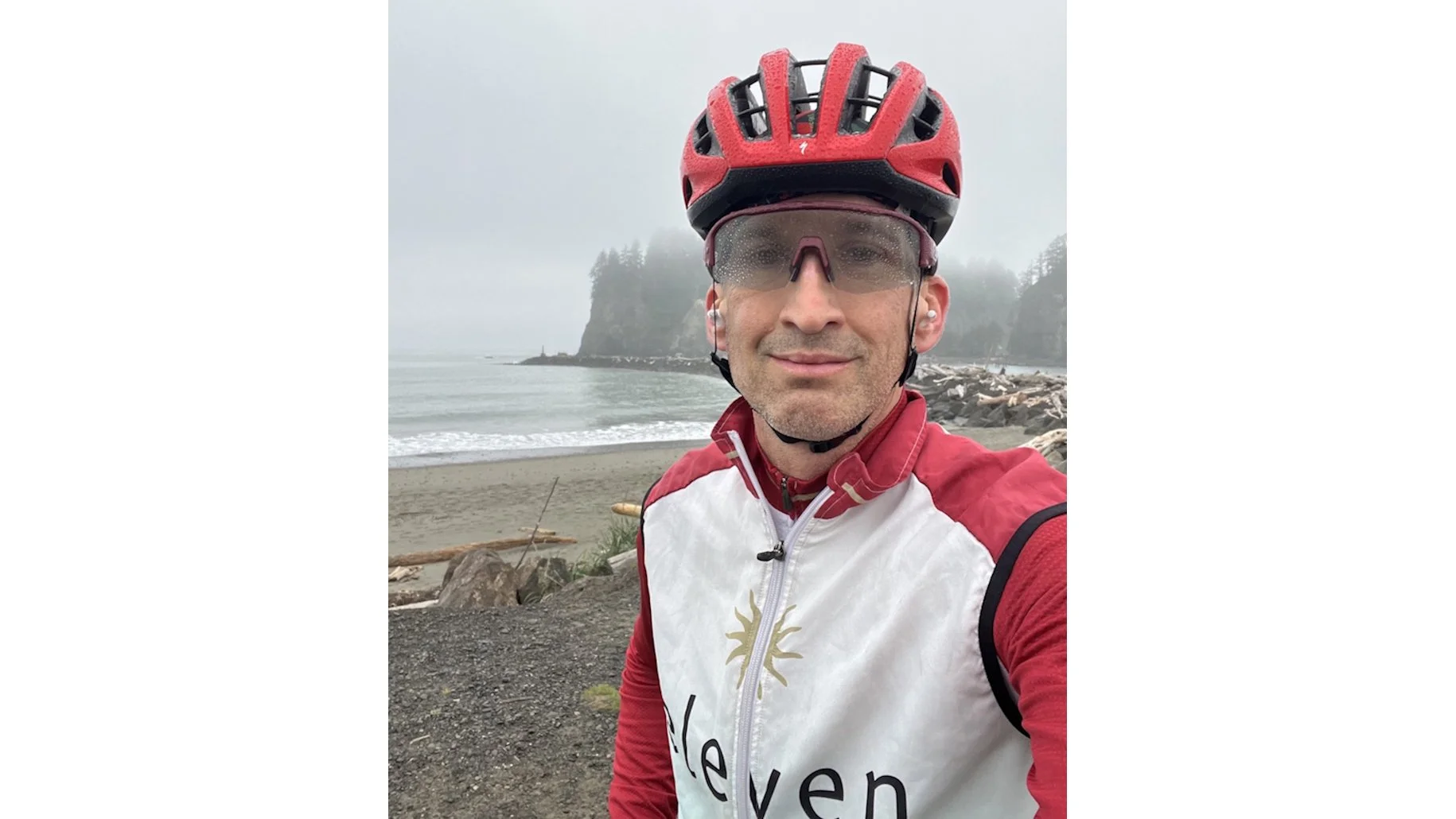
Why I keep going back to XWA
This year was my fifth XWA in six years. Why do I choose to spend a week each May sleeping rough by the side of the road and living on convenience store food, you might ask? I go for the beauty, the challenge, the adventure and the camaraderie. Plus I get to ride my bike all day and not worry about anything else for a week.
by Matt Albee
Cross Washington (XWA) is a bikepacking event that traverses the state of Washington from the seaside town of La Push to the Idaho border 1,200km away. The route is public, so you can ride it any time, but the Grand Depart–when dozens of riders head off from First Beach at the same time–happens on the third Sunday in May each year. From the moss- and fern-filled forests of the Olympic Peninsula to the rolling, wheat-covered hills of the Palouse at the Idaho border, the state glows green from edge to edge.
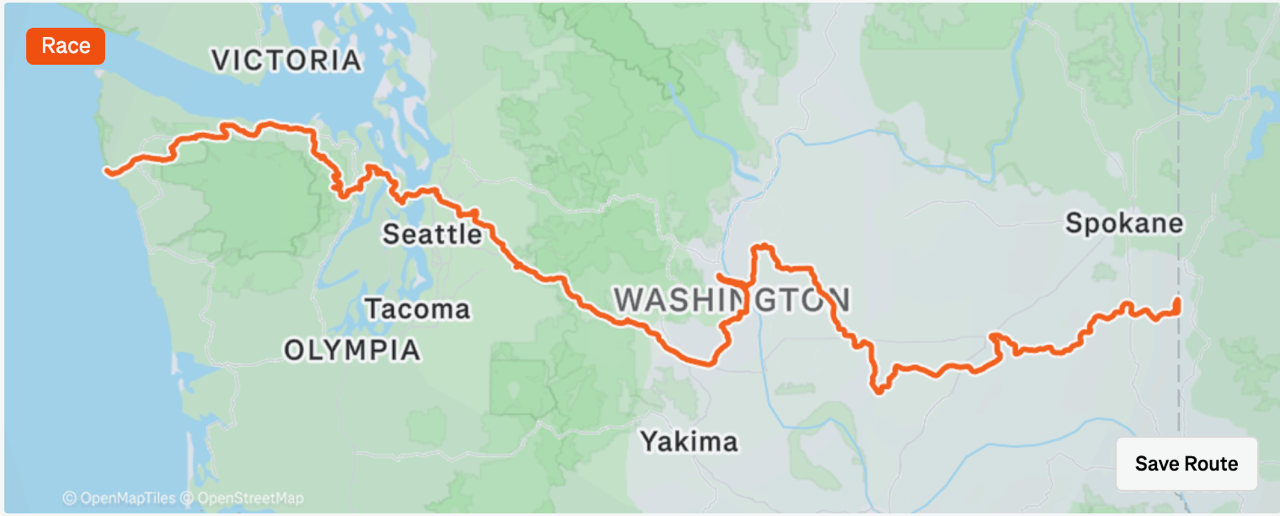
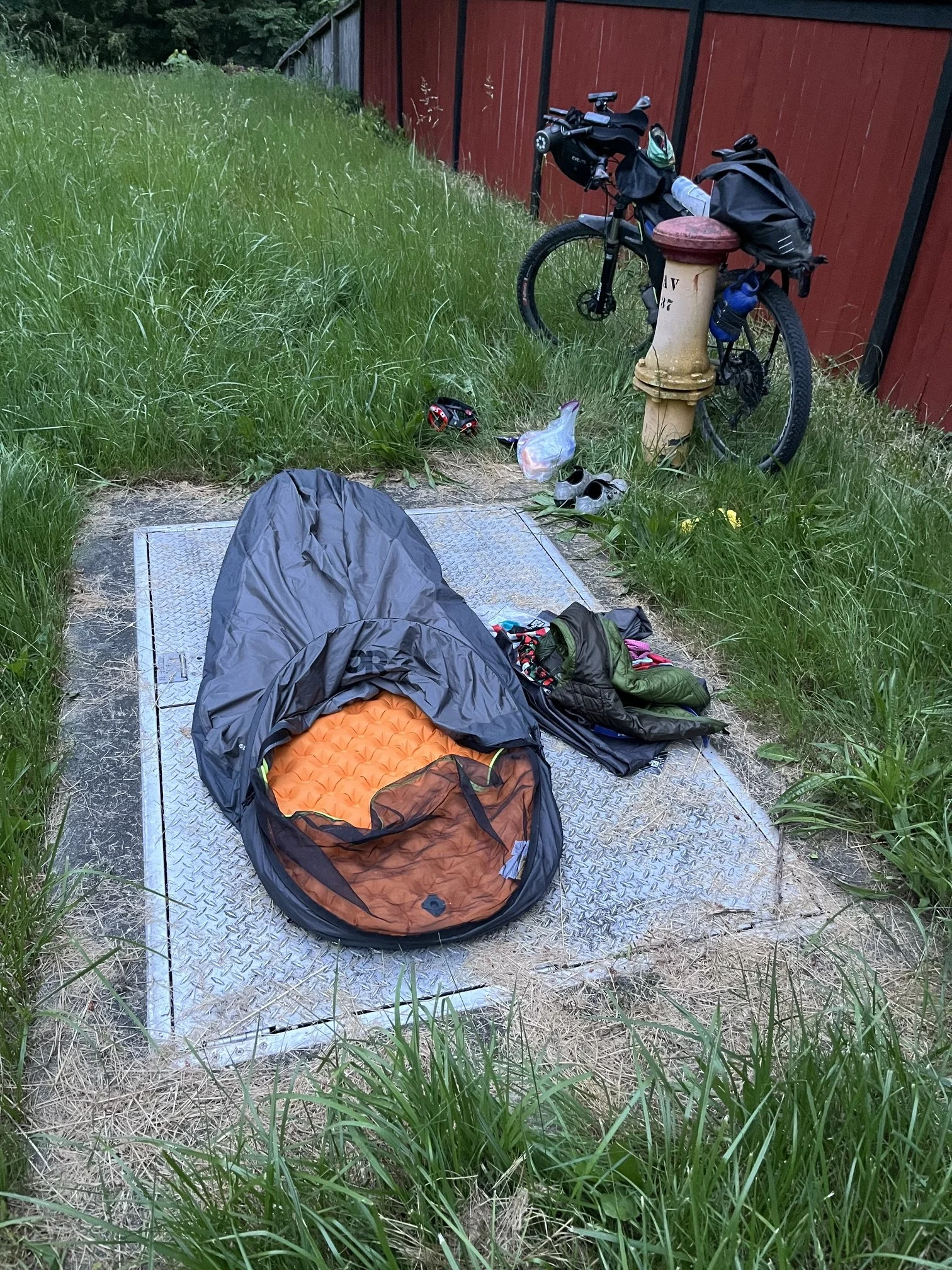
This year was my fifth XWA in six years. Why do I choose to spend a week each May sleeping rough by the side of the road and living on convenience store food, you might ask? I go for the beauty, the challenge, the adventure and the camaraderie. Plus I get to ride my bike all day and not worry about anything else for a week. You don’t have to take a max-miles approach like I do; you can (and most do) ride whatever daily distance feels good, sleep wherever you’re comfortable (hotels, if you’re posh), and eat whatever you fancy (no worries about weight gain on this trip, and there are some great places to eat along the way). You still get to experience all the great things the route has to offer.
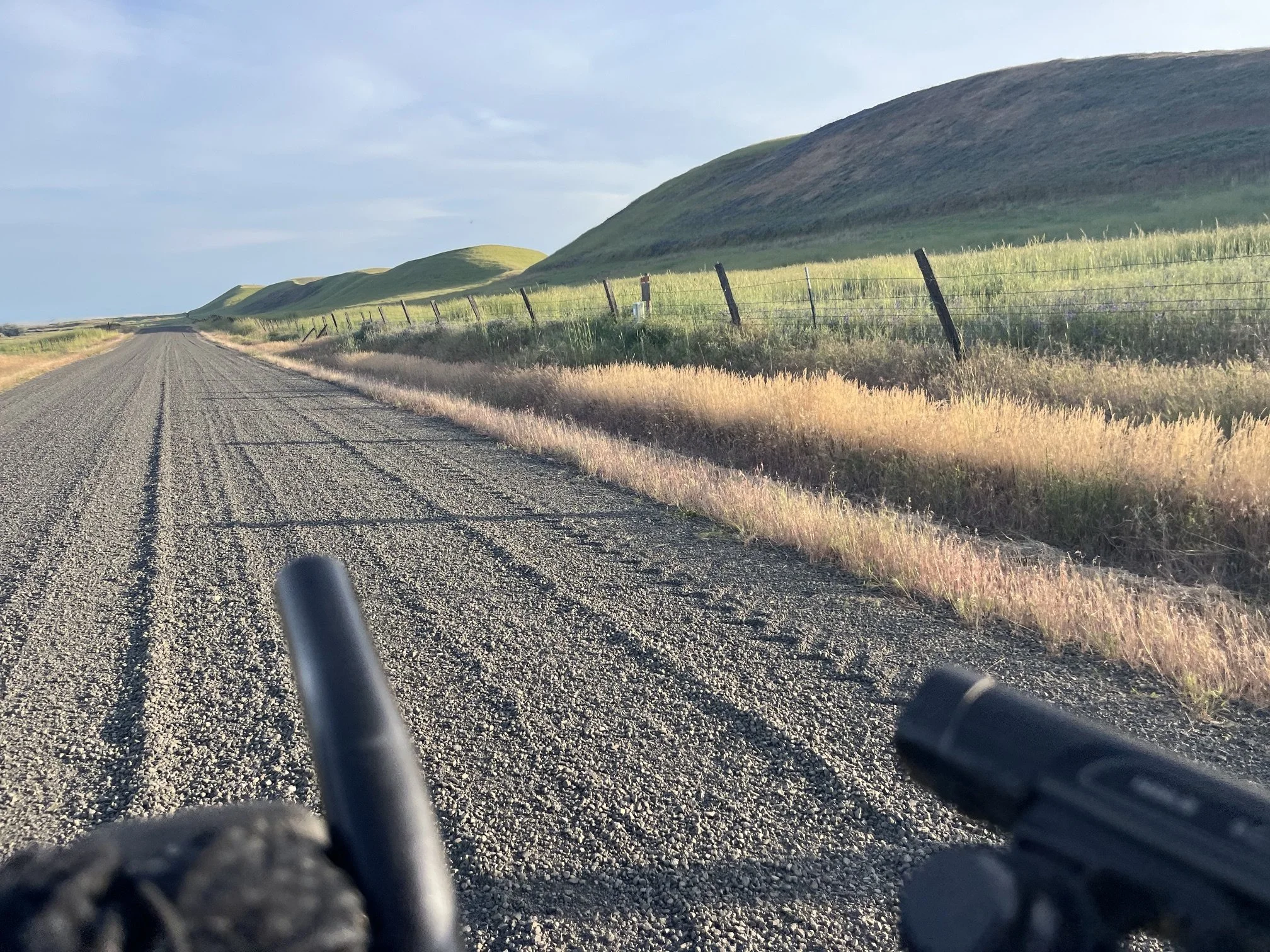
The beauty starts at the beach, with its expanses of smooth sand and seastacks jutting mysteriously up out of the ocean, and doesn’t let up all the way to Idaho, where the green hills are reminiscent of Tuscany (without the towns and traffic). In between are views of and from high in the mountains of the Olympics and the Cascades, vertiginous trestles spanning stream-filled valleys; mountain lakes and countless rivers. In eastern Washington, you get to ride between the vertical basalt-column walls of Moses Coulee, across the plains and into the fractured hills that presage the Palouse. And that’s just a sampling.
On day 2 or 3, depending on your speed, the route takes you through Seattle and a section that is uniquely fun, filled with urban-park adventures, a lot like gravel riding in Victoria, but with even more screaming fast downhills. Somehow you make your way across two major interstate highways and an area with a population of millions and it feels like you’ve been wandering through quiet neighborhoods. You even get to take a Washington State ferry at one point (ride-on, ride-off, no need to walk your bike). The scenery is always changing. Unlike bikepacking on just the Olympic Peninsula or Vancouver Island, where you get trees, trees, and more trees, XWA passes through many different climate and geologic zones, giving it the feel of a great journey.
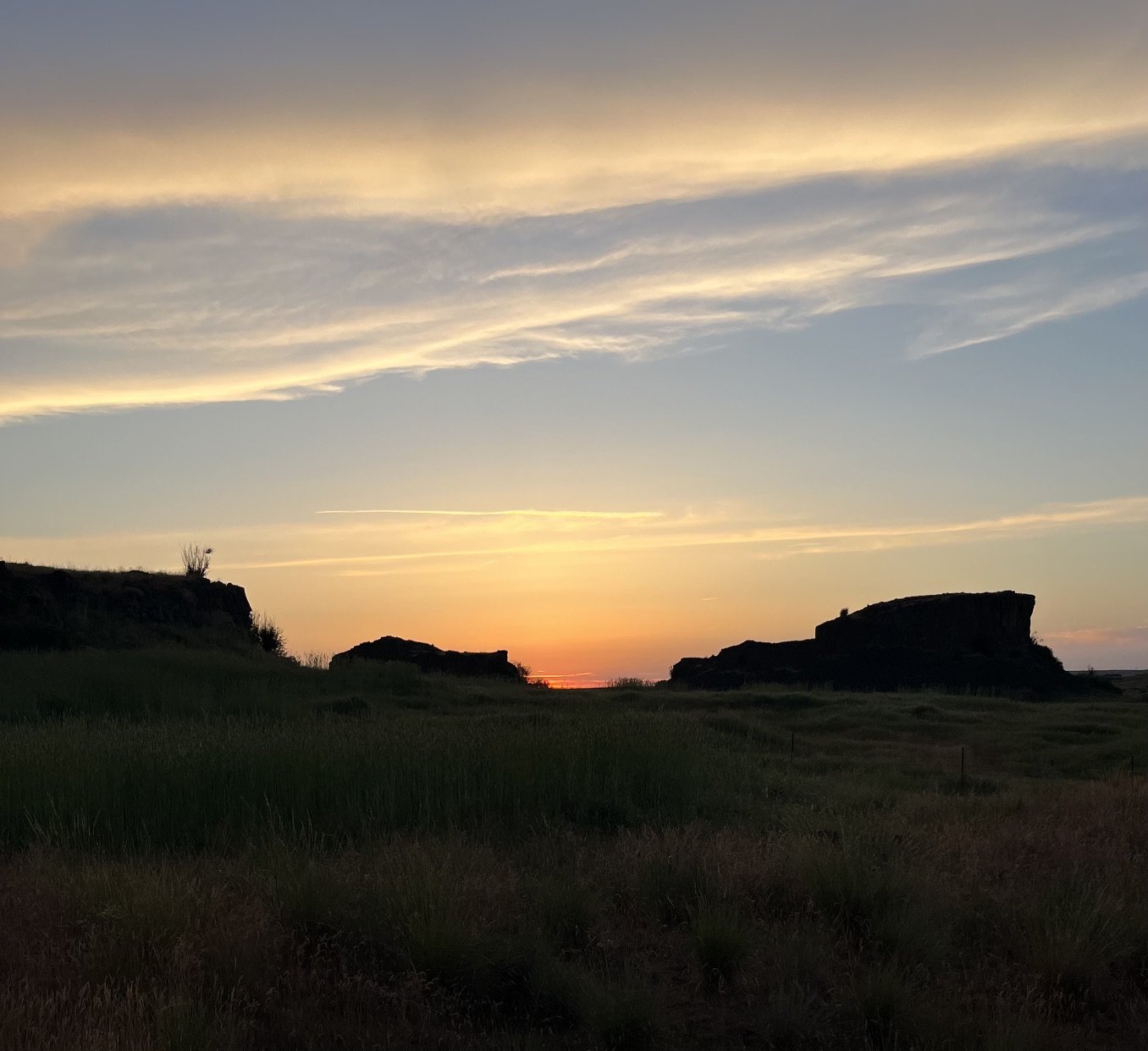
The challenge of the route should not be undersold. Soon after leaving the beach, you face a steep, primitive 650-metre gravel climb and descent, followed by 35 km of delightful singletrack that is the Olympic Adventure Trail. Around kilometer 150, the major test of the Olympic Mountains begins, with 1,500m of steep gravel climbing comprising four pitches, maxing out at 1,000 m.
The fearsome beauty of the rockpile that is the Colockum Ridge doesn’t start until just past the halfway point of the route, after you’ve crossed the Cascades. It climbs 900 m to an elevation of 1,500 m, the highest point on the route, before descending 1,300 m to the Columbia River on the other side. The Colockum’s upper slopes are home to nursing cows, a graceful wind farm, and racing clouds. The surface is extremely rough nearly the entire way, forcing you to stand, sometimes to dismount and push, and to take breaks even on the descent. When you make it across the Colockum, you really feel like you’ve conquered something significant; yet much more lies immediately ahead.
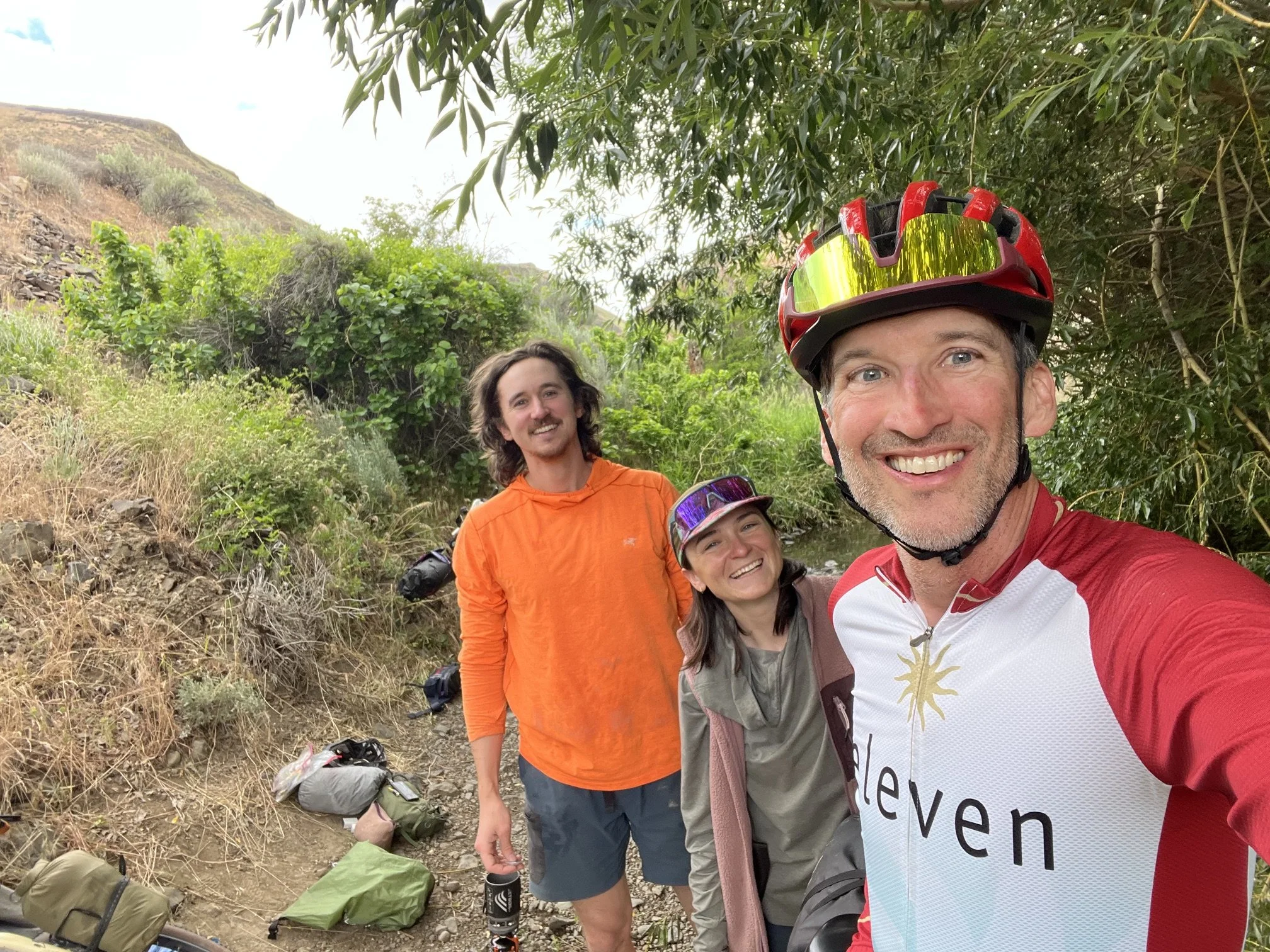
While you may not see another soul while crossing the Colockum, you’re never alone when you’re participating in the Grand Depart. There will be faster riders ahead of you and slower ones behind, their locations visible via their GPS trackers on the event website. It’s always fun to cross paths with other riders and swap stories about where you slept last night and what adventures you’ve had along the way. These folks are but the tip of the iceberg, though, as the thousands of members of the XWA community’s Facebook group keep their eyes on the tracker dots, cheer for you online and sometimes set up feed stations on the route with snacks, treats and water. The greatest of these is the one-man welcoming committee at the finish named John Heaton, the unofficial mayor of the finish town, Tekoa (say “teekoh” to sound like a local), who will greet you with cowbell and camera at any time of the day or night, buy you a meal and offer you a floor to sleep on if you need one, even drive you to the train station the next day.
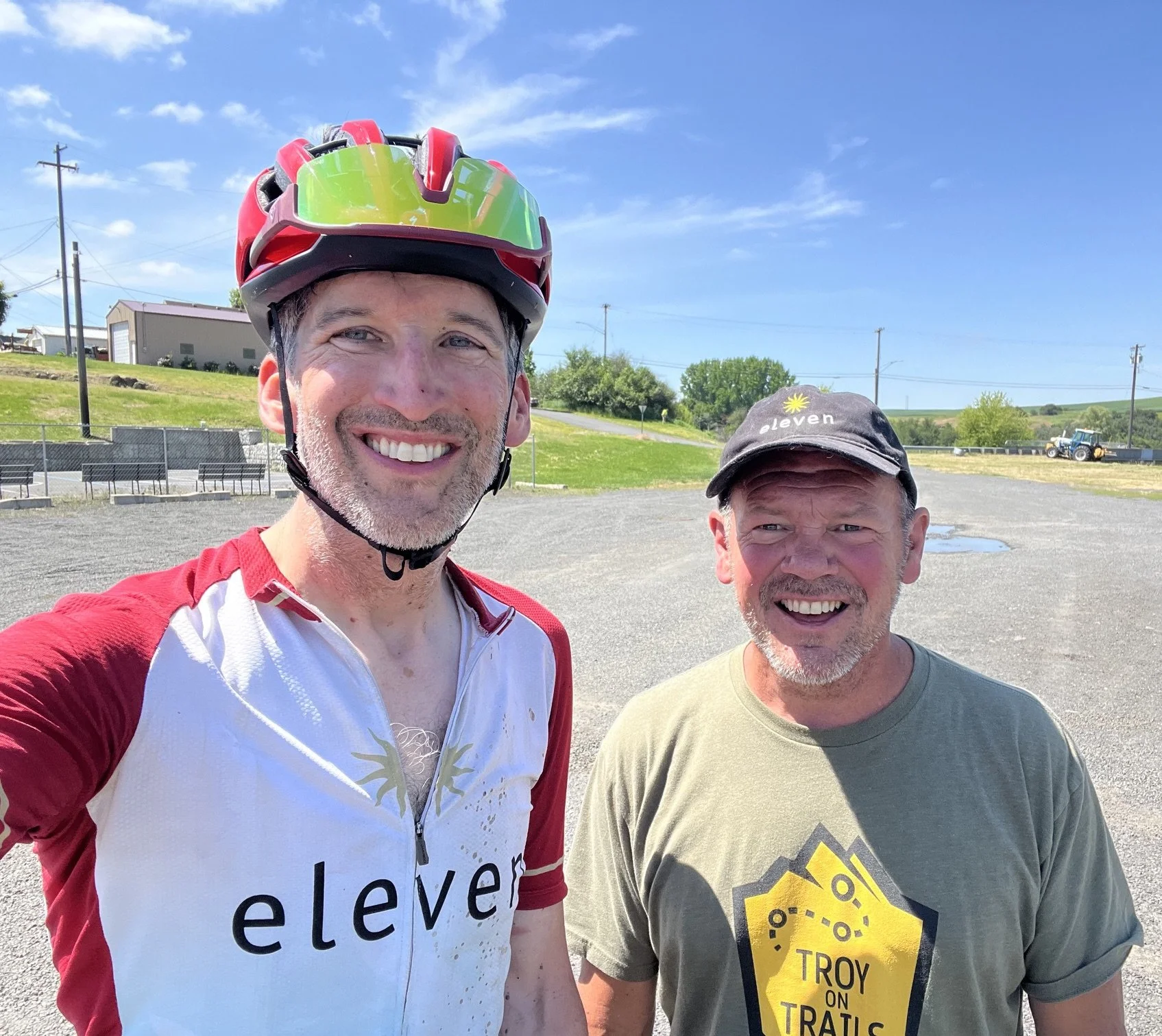
Yes, I will be back again. It’s just the best.
A few notes on the route: In total, the route climbs over 13,000 m, and it can be fairly accurately summarized as “the Tour Divide, divided by four”, though those who have ridden both say XWA is more technically challenging than the TD. There is a “Lite” XWA option with half the climbing and fewer technical challenges. At 900 km long, it’s no joke, you just get to spend more time in your aero bars. Notably, Washington is a solidly Democratic state, politically, so you can think of the dollars you spend there as a poke in the eye of the orange occupant of the White House.